
Harriet Beecher Stowe once remarked that gems are akin to mineral flowers, blooming from the depths of dark, hard mines. While they may lack fragrance, they more than compensate with their enduring nature. Durability is a defining characteristic of a quality gemstone, making them highly valued for their ability to resist the ravages of time and wear. However, not all gemstones possess the same level of resilience. Some are softer and more pliable, whereas others are robust enough to cut through glass. So, how can we assess a gemstone's durability? One reliable method is by evaluating its hardness. The greater the hardness, the more durable and resistant to damage the gemstone is. This assessment is made possible through the Mohs Hardness Scale, a trusted technique that has been refined over the past two centuries.
**Understanding the Mohs Scale of Hardness**
The Mohs Scale of Hardness, introduced by German mineralogist Friedrich Mohs in 1812, was originally developed to classify minerals based on their physical properties. But how exactly did Mohs measure strength and hardness? The scale operates on a simple principle: determining which gemstone can scratch another. Essentially, a gemstone that ranks higher on the Mohs scale can scratch those that rank lower. While the scale was initially intended for all minerals, jewelers soon discovered its particular relevance to gemstones. This insight allows them to better understand gemstone properties, aiding in the creation and maintenance of exquisite jewelry. To fully appreciate this, it's essential to grasp the basics of the Mohs hardness scale.
At the top of the scale sits the diamond, with a perfect score of 10. No other mineral on the Mohs scale can easily scratch a diamond. Just below, at a score of 9, is corundum, the mineral family that includes both sapphires and rubies. These gemstones, along with any others scoring a 9, can only be scratched by a diamond and not by each other. This unique characteristic makes sapphires and rubies a durable and stunning choice for jewelry, offering a compelling reason to expand your collection of these beautiful designs.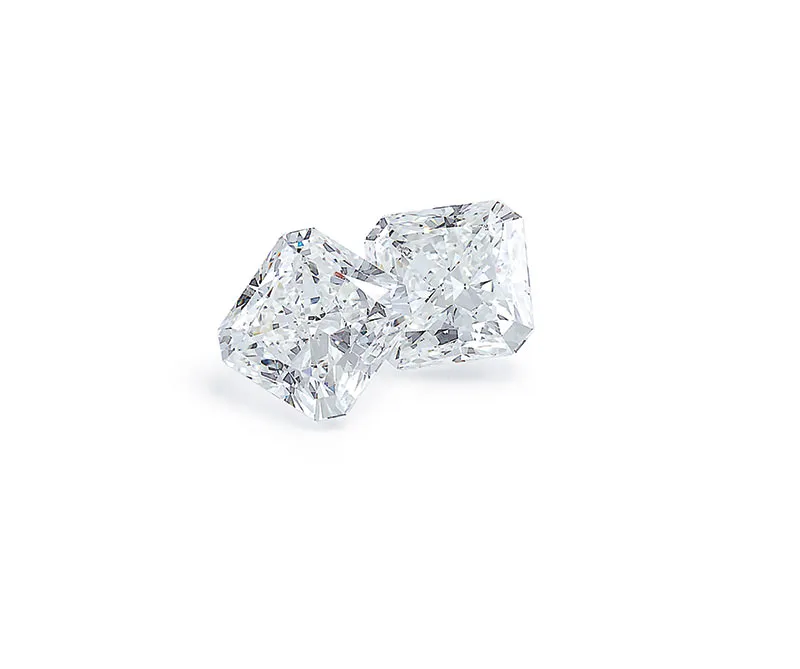
In the world of gemstones and minerals, those that score 7 or higher on the Mohs scale are deemed hard and durable enough for crafting jewelry. Interestingly, pure 24k gold is relatively soft, with a Mohs rating of just 2.9. This softness necessitates alloying gold with other metals to boost its strength and durability. For instance, 14k gold jewelry is created by mixing 14 parts gold with 10 parts of another metal. Among the few gemstones that rank high on the Mohs scale for hardness are rubies and sapphires. Beryl, a key component of emeralds and aquamarine, scores between 7.5 and 8, while topaz scores an 8. Gemstones below a 7, like quartz, are considered soft because they cannot easily scratch glass. Although the Mohs scale is widely regarded as accurate, it's important to view the numbers as rankings rather than a linear scale, as the intervals between each number are not uniform.
The more you know!