
The more you know...
Carat, Karat & Carrots: Why One Sparkles, One Shines, and One Belongs in Your Sa
Published: Jul 21, 2026
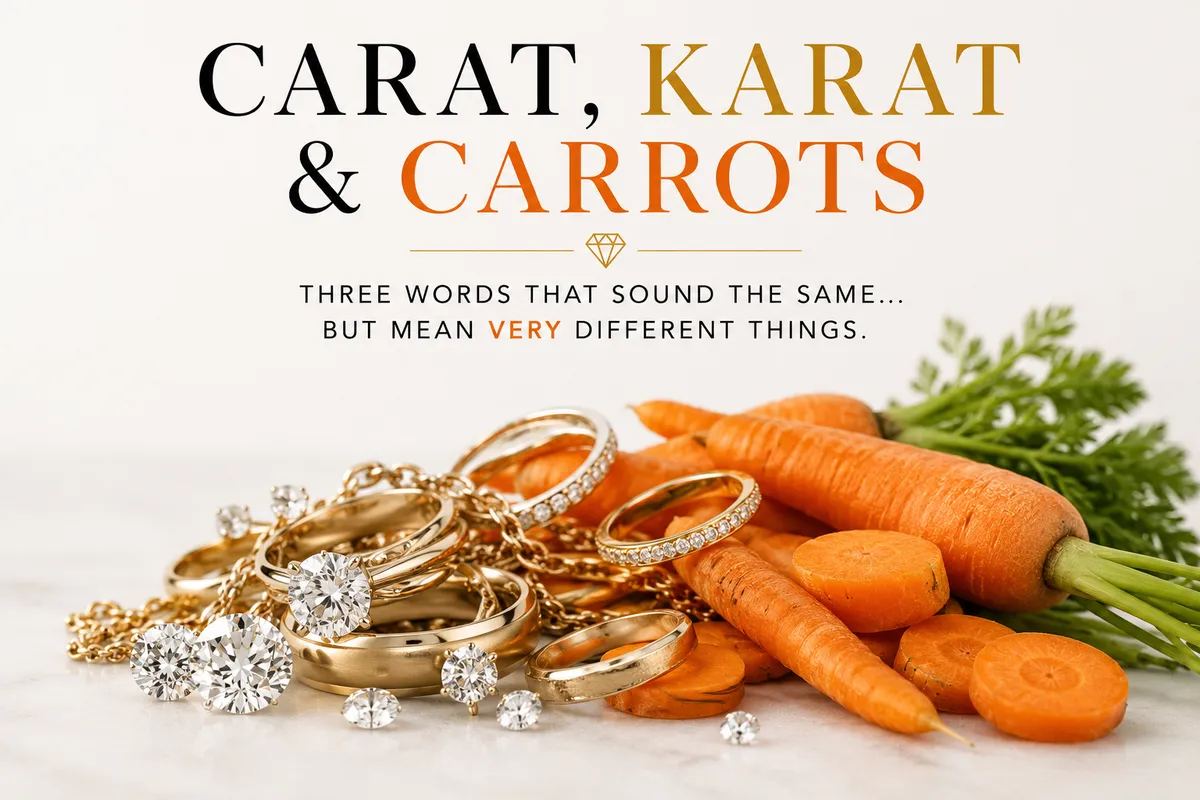
Carat, Karat & Carrots: Why One Sparkles, One Shines, and One Belongs in Your Salad
Have you ever confidently walked into a jewelry store and asked for a "24-carat diamond?"
Don't worry...you're not the first, and you definitely won't be the last.
The English language decided to make life interesting by giving us carat, karat, and carrot—three words that sound almost identical but couldn't be more different.
Today, we're clearing up the confusion once and for all (with a few vegetable facts thrown in for good measure).
? Carrot: The Crunchy One
Let's start with the easiest.
A carrot is orange (usually), grows in the ground, and is delicious with ranch dressing.
Carrots are packed with vitamin A, fiber, and antioxidants. They are good for your eyesight...although despite what your parents told you, they won't actually give you superhero night vision.
Fun Carrot Facts
The world's longest carrot measured over 20 feet long.
Carrots weren't originally orange—they were purple, yellow, white, and even black! Dutch growers popularized the orange variety centuries ago.
Baby carrots aren't actually baby carrots. Most are full-sized carrots cut down into snack-sized pieces.
If someone tells you they "carrot" about you...they're probably making a terrible jewelry joke.
Now that we've covered the vegetable, let's get to the sparkly stuff.
? Carat: The Weight of a Diamond
A carat (with a C) measures the weight of a gemstone—not its size.
One carat equals 0.2 grams, or about the weight of a small paperclip.
This is one of the biggest misconceptions people have about diamonds. Two diamonds can both weigh one carat but look completely different in size depending on how they're cut.
Imagine two people who both weigh 180 pounds.
One is a professional basketball player.
The other is built like a powerlifter.
Same weight. Very different appearance.
Diamonds work the same way.
A well-cut diamond distributes its weight beautifully and often appears larger, brighter, and more brilliant than a poorly cut stone of the exact same carat weight.
At Saxon's, we're big believers that cut quality matters just as much if not more than carat weight. After all, a diamond's sparkle comes from how it handles light, not simply how much it weighs.
✨ Karat: The Purity of Gold
Now for karat (with a K).
Karat measures how pure gold is.
Pure gold is incredibly soft—so soft that a ring made from 24-karat gold would scratch and bend much more easily than most people expect.
That's why jewelers mix gold with other metals to improve durability.
Here's the breakdown:
24K Gold
99.9% pure gold
Rich yellow color
Softest option
Rarely used for everyday engagement rings
18K Gold
75% gold
Luxurious color
Great balance of beauty and durability
A favorite for fine jewelry
14K Gold
58.5% gold
Excellent durability
Most popular choice in the United States
Perfect for everyday wear
10K Gold
41.7% gold
Most durable
More affordable
Slightly lighter in color
Think of karat like chocolate.
A higher cocoa percentage means more chocolate.
A higher karat means more gold.
(Although we don't recommend eating either your jewelry or your engagement ring.)
Easy Way to Remember
Here's a quick trick:
Carat = Diamond Weight
Think:
"How much does the diamond weigh?"
Karat = Gold Purity
Think:
"How much gold is in the jewelry?"
Carrot = Dinner
Think:
"Should probably go in the refrigerator."
Why It Matters When You're Shopping
Knowing the difference helps you compare jewelry more confidently.
If someone tells you a ring is:
2 carats, they're talking about the diamond's weight.
18 karat, they're talking about the gold it's made from.
Organic carrots, they're probably in the produce section.
Understanding these terms helps ensure you're comparing apples to apples—or perhaps carrots to carats.
The Saxon's Difference
Buying fine jewelry doesn't have to feel intimidating.
Whether you're shopping for an engagement ring, upgrading a diamond, or choosing the perfect gold necklace, our team loves answering questions and helping you understand exactly what you're buying.
No confusing jargon.
No pressure.
Just honest guidance and beautiful jewelry.
So next time someone asks the difference between carat, karat, and carrot, you'll have the answer.
And hopefully, you'll also be craving a snack.
Stop by Saxon's Fine Jewelers anytime—we're always happy to talk diamonds, gold...and maybe even vegetables.
Have you ever confidently walked into a jewelry store and asked for a "24-carat diamond?"
Don't worry...you're not the first, and you definitely won't be the last.
The English language decided to make life interesting by giving us carat, karat, and carrot—three words that sound almost identical but couldn't be more different.
Today, we're clearing up the confusion once and for all (with a few vegetable facts thrown in for good measure).
? Carrot: The Crunchy One
Let's start with the easiest.
A carrot is orange (usually), grows in the ground, and is delicious with ranch dressing.
Carrots are packed with vitamin A, fiber, and antioxidants. They are good for your eyesight...although despite what your parents told you, they won't actually give you superhero night vision.
Fun Carrot Facts
The world's longest carrot measured over 20 feet long.
Carrots weren't originally orange—they were purple, yellow, white, and even black! Dutch growers popularized the orange variety centuries ago.
Baby carrots aren't actually baby carrots. Most are full-sized carrots cut down into snack-sized pieces.
If someone tells you they "carrot" about you...they're probably making a terrible jewelry joke.
Now that we've covered the vegetable, let's get to the sparkly stuff.
? Carat: The Weight of a Diamond
A carat (with a C) measures the weight of a gemstone—not its size.
One carat equals 0.2 grams, or about the weight of a small paperclip.
This is one of the biggest misconceptions people have about diamonds. Two diamonds can both weigh one carat but look completely different in size depending on how they're cut.
Imagine two people who both weigh 180 pounds.
One is a professional basketball player.
The other is built like a powerlifter.
Same weight. Very different appearance.
Diamonds work the same way.
A well-cut diamond distributes its weight beautifully and often appears larger, brighter, and more brilliant than a poorly cut stone of the exact same carat weight.
At Saxon's, we're big believers that cut quality matters just as much if not more than carat weight. After all, a diamond's sparkle comes from how it handles light, not simply how much it weighs.
✨ Karat: The Purity of Gold
Now for karat (with a K).
Karat measures how pure gold is.
Pure gold is incredibly soft—so soft that a ring made from 24-karat gold would scratch and bend much more easily than most people expect.
That's why jewelers mix gold with other metals to improve durability.
Here's the breakdown:
24K Gold
99.9% pure gold
Rich yellow color
Softest option
Rarely used for everyday engagement rings
18K Gold
75% gold
Luxurious color
Great balance of beauty and durability
A favorite for fine jewelry
14K Gold
58.5% gold
Excellent durability
Most popular choice in the United States
Perfect for everyday wear
10K Gold
41.7% gold
Most durable
More affordable
Slightly lighter in color
Think of karat like chocolate.
A higher cocoa percentage means more chocolate.
A higher karat means more gold.
(Although we don't recommend eating either your jewelry or your engagement ring.)
Easy Way to Remember
Here's a quick trick:
Carat = Diamond Weight
Think:
"How much does the diamond weigh?"
Karat = Gold Purity
Think:
"How much gold is in the jewelry?"
Carrot = Dinner
Think:
"Should probably go in the refrigerator."
Why It Matters When You're Shopping
Knowing the difference helps you compare jewelry more confidently.
If someone tells you a ring is:
2 carats, they're talking about the diamond's weight.
18 karat, they're talking about the gold it's made from.
Organic carrots, they're probably in the produce section.
Understanding these terms helps ensure you're comparing apples to apples—or perhaps carrots to carats.
The Saxon's Difference
Buying fine jewelry doesn't have to feel intimidating.
Whether you're shopping for an engagement ring, upgrading a diamond, or choosing the perfect gold necklace, our team loves answering questions and helping you understand exactly what you're buying.
No confusing jargon.
No pressure.
Just honest guidance and beautiful jewelry.
So next time someone asks the difference between carat, karat, and carrot, you'll have the answer.
And hopefully, you'll also be craving a snack.
Stop by Saxon's Fine Jewelers anytime—we're always happy to talk diamonds, gold...and maybe even vegetables.